How Much Does It Cost to Own an EV in Indonesia?
One of the main considerations before buying an EV is its long-term ownership cost. In addition to the vehicle purchase price, EV owners also need to consider charging costs, periodic servicing, vehicle taxes, and insurance protection.
Although EV prices in Indonesia are still relatively higher than some conventional cars, the daily operating costs of EVs are generally lower. This makes many prospective buyers begin to consider the total cost of ownership before choosing a vehicle.
If you are still comparing vehicle prices before buying, you can also see the latest list of EV prices in Indonesia to understand the budget range for each vehicle segment.
After understanding the vehicle's purchase price, the next step is to evaluate its day-to-day operating costs. One of the most significant recurring expenses for EV owners is the cost of charging the vehicle.
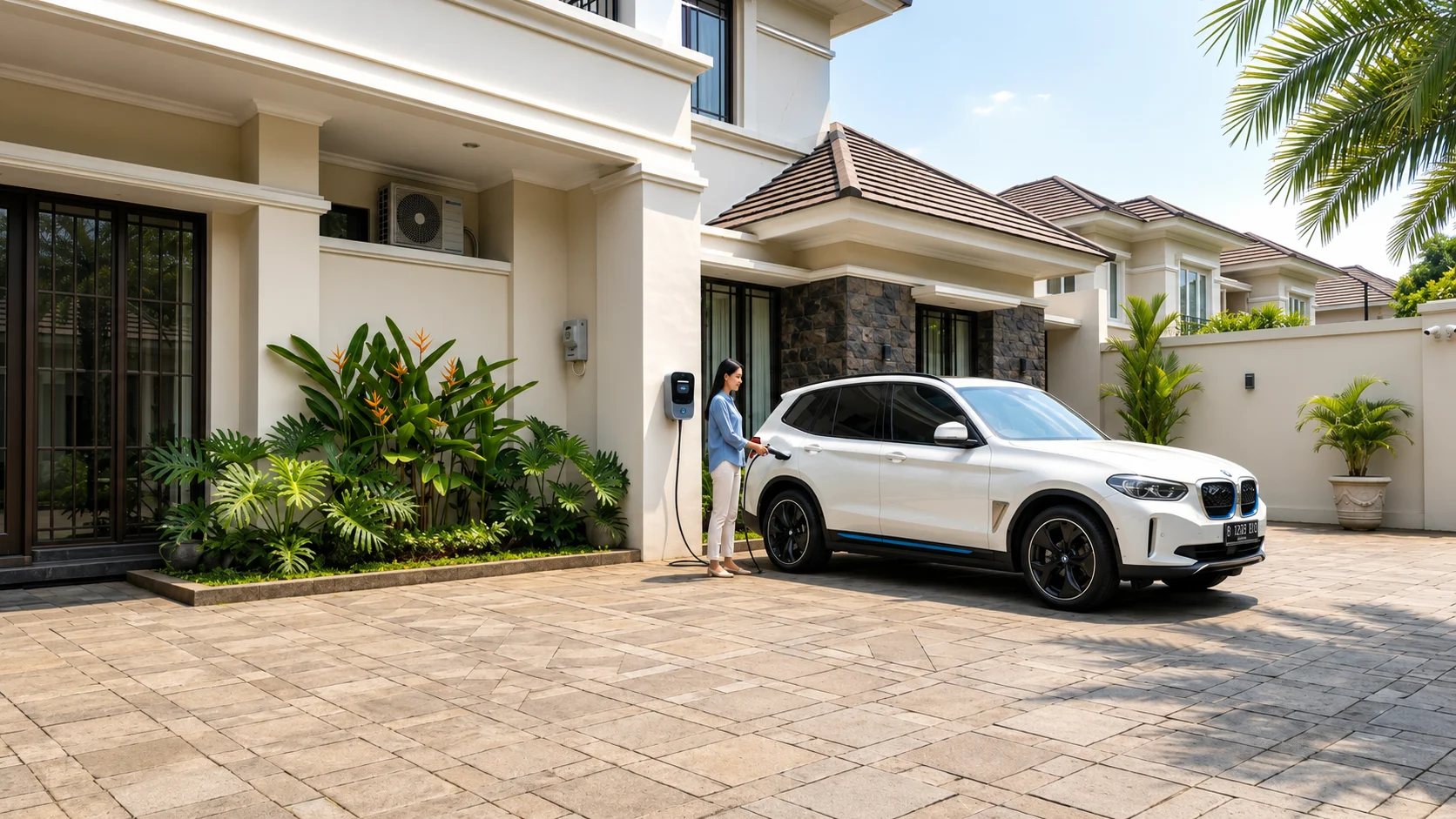
Home vs Public EV Charging Station Costs
One of the main advantages of EV is that energy costs are more economical than gasoline-powered vehicles.
Charging Method
| Estimated Cost
per Full Charge
| Estimated Driving Range
| Estimated Cost per Km
|
|---|
Home Charging
| IDR 50,000 to
IDR 70,000
| 300 to 400 km
| IDR 125 to IDR 230/km
|
Public EV
Charging Station
| IDR 75,000 to
IDR 120,000
| 300 to 400 km
| IDR 190 to IDR 300/km
|
Disclaimer: Simulation based on household electricity capacity of 2,200 VA to 7,700 VA and PLN tariffs as of October 2025. Actual costs may vary depending on battery capacity, electricity tariffs, charging location, and vehicle usage patterns.
For comparison, a gasoline car with fuel consumption of 12 km/liter and a fuel price of IDR 14,000/liter results in a cost of around IDR 1,200 per km, or several times higher than an EV for daily use.
In addition to lower energy costs, EV owners may also benefit from reduced maintenance expenses, as electric vehicles generally require less routine servicing than conventional gasoline-powered vehicles.
Maintenance Costs of EVs vs Conventional Cars
EVs have fewer moving components than gasoline-powered cars. Because they do not use engine oil and an internal combustion system, routine service needs tend to be simpler.
Component
| Gasoline Car
| EV
|
|---|
Engine Oil
| Regular replacement
| Not required
|
Filters and Radiator
| Routine maintenance
| More minimal
|
Brakes
| Wear out faster
| Tend to last longer
|
Periodic Servicing
| IDR 2 million to
IDR 4 million/year
| IDR 500 thousand to
IDR 1 million/year
|
Disclaimer: Service cost estimates are based on common practices in Indonesia and may vary depending on the brand, model, vehicle usage, and the official workshop policies of each manufacturer.
PT Hyundai Motors Indonesia (HMID) confirmed that the total periodic maintenance cost for the Hyundai Ioniq 5 over 5 years (or up to 75,000 km) is highly efficient, ranging only from IDR 3.27 million to IDR 3.77 million. This figure is much cheaper compared with the total maintenance cost of conventional cars with gasoline engines (Internal Combustion Engine) in the equivalent SUV class, which generally spend tens of millions of rupiah for the same period of time.
Beyond charging and maintenance costs, government incentives can also play a meaningful role in reducing the overall cost of EV ownership in Indonesia.
Taxes and Incentives for EVs in Indonesia
The Indonesian government provides various incentives to encourage the use of battery-based EVs. Some of the available incentives include:
0% Luxury Goods Sales Tax for certain EVs
Motor vehicle tax discounts in several regions
Exemption from the odd-even traffic restriction in the Special Capital Region of Jakarta
Reduction or exemption of vehicle title transfer fees in certain regions
Based on the Legal Documentation and Information Network of the Special Capital Region of Jakarta Province and Audit Board Regulations, the regulation concerning Special Capital Region of Jakarta Governor Regulation No. 3 of 2020 stipulates that battery-based EVs receive an exemption from Motor Vehicle Title Transfer Fees in the Special Capital Region of Jakarta as part of the policy to accelerate environmentally friendly vehicles.
While these incentives can help lower ownership costs, vehicle protection remains an important expense that should be included in any long-term budgeting plan.
EV Insurance Costs
In addition to operational costs, vehicle protection is also an important part of EV ownership. This is because components such as the battery, electrical system, sensors, and electronic modules have relatively high repair values.
Here are several types of protection that are important to consider for EVs:
Type of
Protection
| Important for EVs
| Description
|
|---|
All Risk
Insurance
| Yes
| Protects against the risk of
major and minor damage
|
Battery
Protection
| Yes
| The battery is one of the
most expensive components
|
Third-Party Liability
| Yes
| Helps provide protection when
causing losses to other parties
|
Evacuation and Towing
| Yes
| Important when the vehicle
experiences system issues
|
Disclaimer: Policy coverage and protection features may differ for each insurance company. Be sure to read the terms, conditions, exclusions, and battery protection details before purchasing a policy.
Understanding the types of protection available is an important first step. However, it is equally important to understand why insurance remains a key component of EV ownership costs.
Why is EV Insurance Still Important?
Although EV operating costs tend to be lower, the risk of vehicle damage still needs to be considered. Damage caused by accidents, floods, electronic system disruptions, or battery replacement costs can result in large expenses without appropriate protection.
EV insurance helps provide financial protection against various vehicle risks according to the type of policy selected. For new or high-value vehicles, comprehensive or all risk protection is generally more recommended.
Oona provides EV insurance options that can be used for EVs, including comprehensive protection and emergency assistance in accordance with the applicable policy terms.
After considering charging costs, maintenance expenses, government incentives, and vehicle protection, you can develop a more complete understanding of the total cost of owning an electric vehicle.
Understanding the Total Cost of Ownership Before Buying an EV
The cost of owning an EV does not only come from the vehicle purchase price. You also need to calculate charging costs, periodic servicing, taxes, government incentives, and insurance protection from the start.
By understanding this total cost, the decision to buy an EV can be more realistic and aligned with daily usage needs. If you are still considering a suitable model, you can also see recommendations for the best EVs in Indonesia as a reference before making a choice.
For vehicle protection, you can also learn about EV insurance from Oona and get a free EV insurance quote through MyOona.id.