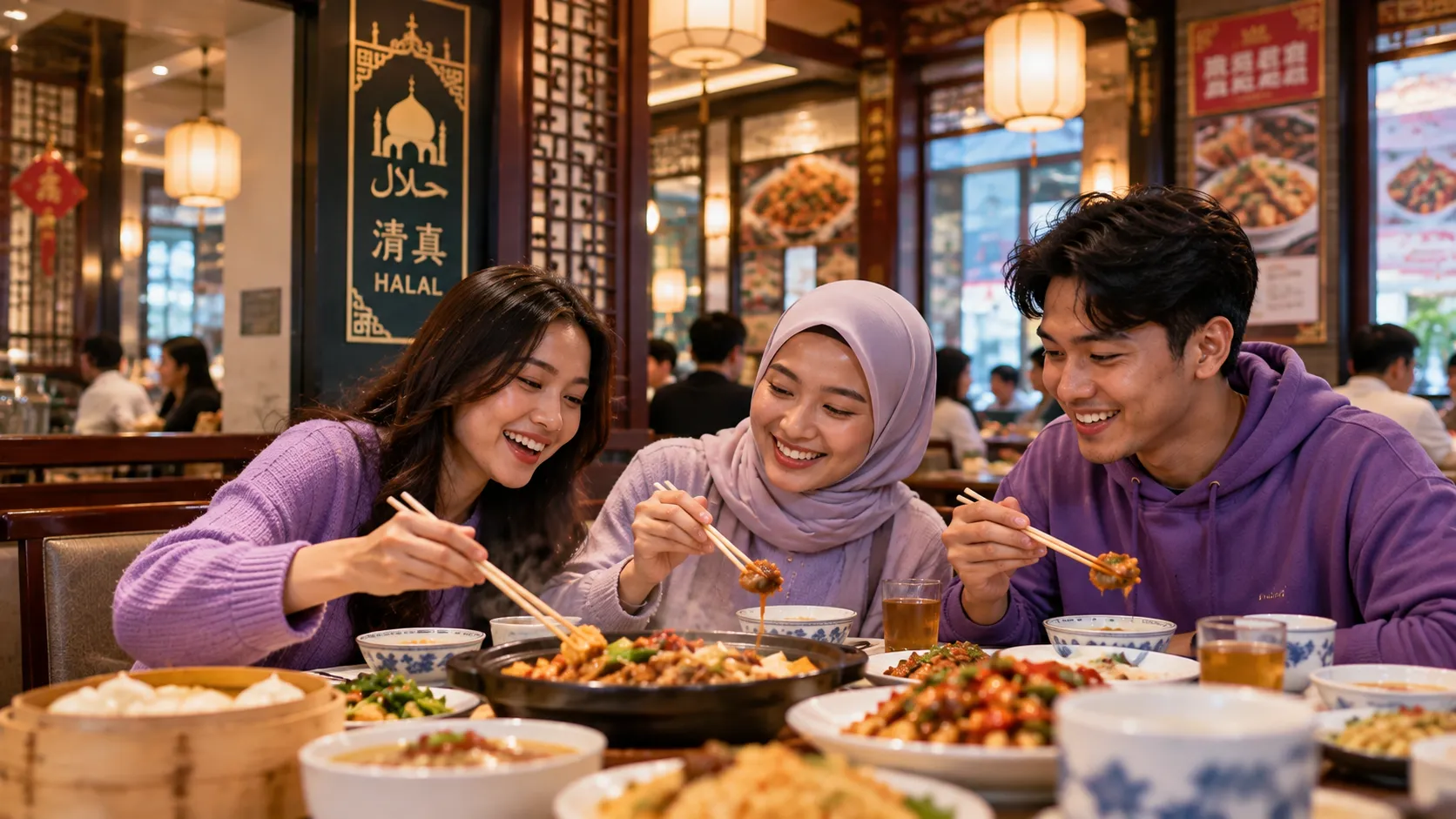
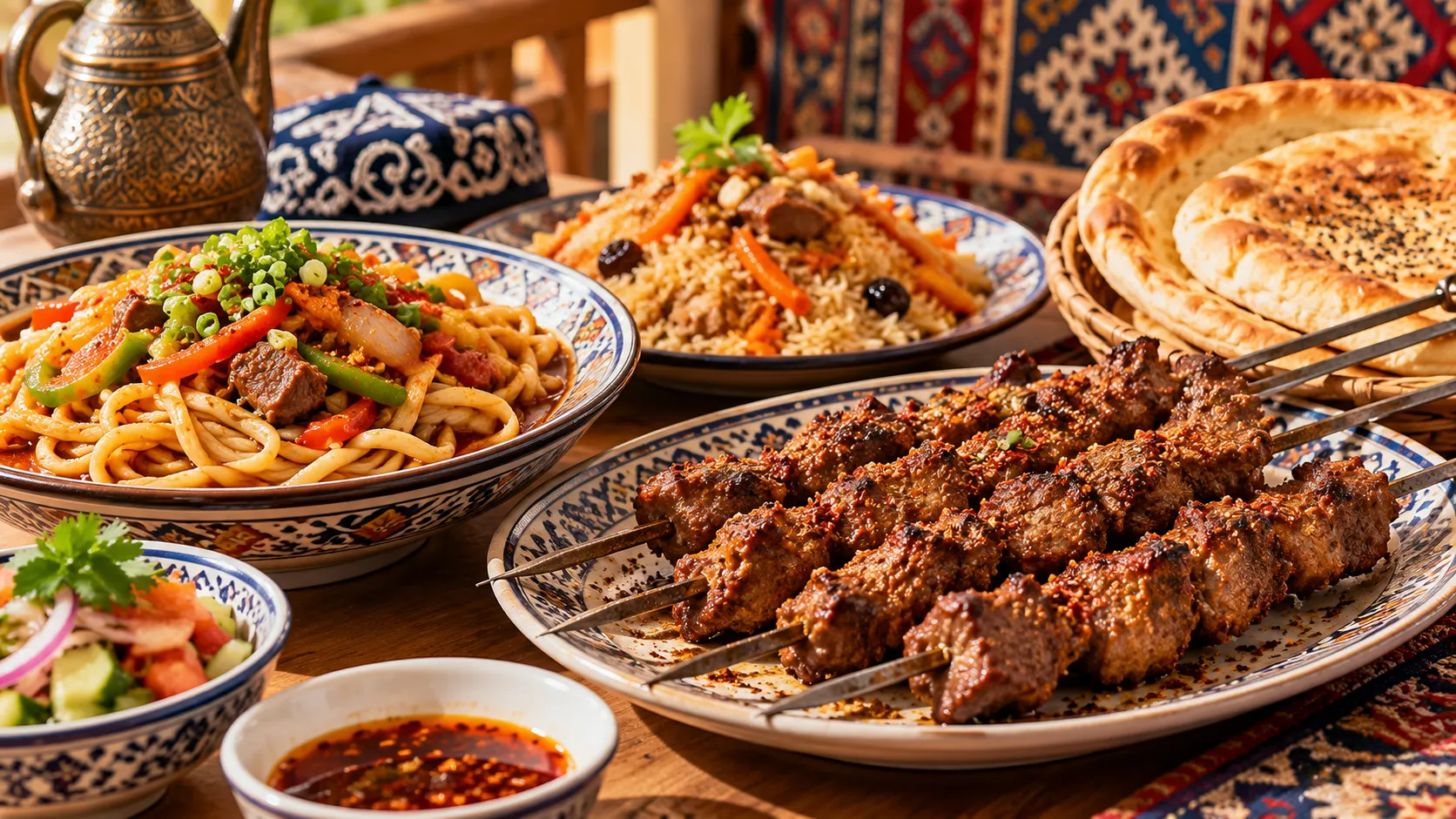
Xinjiang cuisine is known for its use of lamb or mutton, noodles, bread, and spices. Popular dishes include meat skewers (chuanr) and Uyghur-style noodles. Xinjiang restaurants can be an option for Muslim travelers, but it is still important to verify ingredients and food preparation practices.
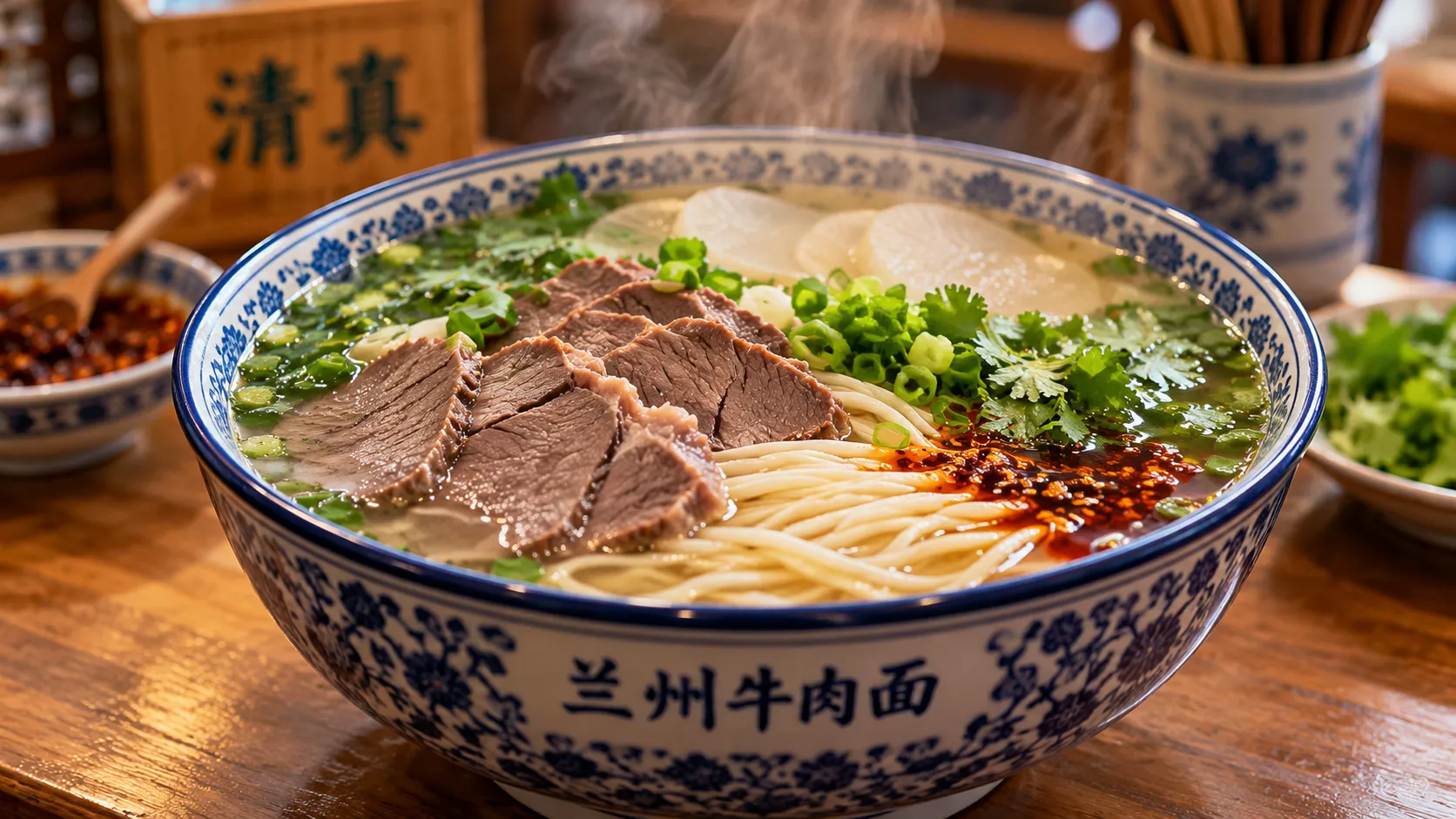
Lanzhou Beef Noodles and Xinjiang specialties are two examples of dishes Muslim travelers can try while visiting China. Beyond these two options, many other halal foods can be found in various cities, especially in areas with Muslim communities. Each city offers different dishes and culinary characteristics, allowing travelers to explore more food options based on their destinations.
Cities in China with Halal Food Options
The availability of halal food in China varies by city, depending on the presence of Muslim communities, tourist areas, and the number of restaurants. Some destinations have well-known Muslim food districts, while others have halal restaurants spread across different locations.
For Indonesian Muslim travelers, knowing which areas offer halal food can make trip planning easier. Here are several cities in China worth considering.
1. Xi'an
Xi'an is an appealing destination for Muslim travelers because of its Hui community and strong culinary traditions. One of its best-known areas is the Muslim Quarter, located near the city center and close to the Great Mosque of Xi'an.
In this area, travelers can find traditional dishes such as yangrou paomo (bread soup with lamb or mutton), seasoned noodles, baked bread, and various beef and lamb dishes. Streets lined with food stalls also make the Muslim Quarter one of Xi'an's popular culinary destinations.
In addition to trying local food, travelers can visit the Great Mosque of Xi'an, known for combining traditional Chinese architecture with Islamic elements. Nevertheless, it is important to verify the halal status of each food establishment before purchasing.
2. Beijing
Beijing has a historic Muslim neighborhood called Niujie, known for its halal restaurants, food shops, and Niujie Mosque. The area can be a destination for travelers looking for halal food while learning about the local Muslim community.
Food options in Niujie include beef and lamb dishes, noodles, dumplings, and various traditional Hui snacks. Travelers can also find shops selling packaged foods and traditional treats.
Outside Niujie, halal restaurants are also available in several parts of Beijing, including places serving Xinjiang cuisine and Lanzhou noodles. However, they may be far from major tourist attractions, so it is best to plan where to eat before setting out.
3. Shanghai
As a metropolitan city and international tourist destination, Shanghai offers a wide variety of restaurants, including those serving Hui, Xinjiang, and Lanzhou cuisine.
Travelers can look for dishes such as Lanzhou Beef Noodles, Xinjiang-style meat skewers, and noodles with stir-fried meat and vegetables. One area linked to the history of Shanghai’s Muslim community is the neighborhood around Xiaotaoyuan Mosque.
Unlike Xi'an, which has a famous Muslim food district, Shanghai's halal restaurants tend to be spread across different parts of the city. Travelers are therefore advised to locate restaurants using map apps and check the latest information before visiting.
4. Guangzhou
Guangzhou is one of China’s international trading centers and has a long history of contact with Muslim traders. The city offers halal dining options, including Chinese dishes and food from other countries.
One landmark associated with the history of Guangzhou’s Muslim community is Huaisheng Mosque. Travelers can use the area around the mosque and international trading districts as starting points when looking for halal restaurants.
Food options may include noodles, rice, beef or lamb dishes, and Middle Eastern and South Asian cuisine. However, restaurant availability and menus may change, so travelers should verify locations and halal status before visiting.
5. Lanzhou
Lanzhou, the capital of Gansu Province, is known as the birthplace of Lanzhou Beef Noodles, a noodle dish popular throughout China. The city has culinary traditions closely associated with the Hui Muslim community.
Travelers can find restaurants serving hand-pulled noodles in beef broth, with sliced beef, radish, and toppings such as cilantro and chili oil. Other options include bread, meat dishes, and local specialties.
Lanzhou can be an interesting destination for travelers wishing to explore Hui Muslim cuisine. Although many restaurants use the term Lanzhou Lamian, the name alone should not be used to determine halal status.
6. Yinchuan
Yinchuan is the capital of the Ningxia Hui Autonomous Region, an area with a sizable Hui Muslim community. Hui cultural influences can be seen in local food traditions, buildings, and everyday life.
Local dishes include noodles, meat soups, lamb or mutton preparations, and various breads and snacks. Travelers can also explore regional cooking styles featuring spices and ingredients typical of northwestern China.
For Muslim travelers, Yinchuan can be a destination for exploring cuisine connected to Hui traditions. However, ingredients and preparation methods still need to be checked, even in areas with large Muslim populations.
7. Urumqi
Urumqi, the capital of the Xinjiang Uyghur Autonomous Region, is known for its strong Central Asian culinary influences. Local dishes often feature lamb or mutton, noodles, rice, bread, and spices such as cumin.
Traditional foods worth trying include chuanr (meat skewers), laghman (hand-pulled noodles with stir-fried meat and vegetables), polo (seasoned rice with meat and carrots), and nang (Xinjiang-style flatbread).
Travelers can find these dishes at local restaurants and food districts. Although Uyghur cuisine is closely connected to Muslim traditions, travelers should still verify that ingredients, seasonings, and cooking methods meet their halal requirements.
Note: The information about cities, neighborhoods, and dishes above is intended as general guidance. Restaurant availability, menus, and halal standards may vary by location and date of travel. Travelers are advised to look for the 清真 (qīngzhēn) sign, check recent reviews, and confirm ingredients and preparation methods before ordering.
How to Find Halal Restaurants While Traveling in China
Travelers can use map apps and local search services by entering the keyword 清真 (qīngzhēn) to find halal restaurants nearby. This keyword can help narrow the search, especially in major cities with many dining options.
You can also search for 清真餐厅 (qīngzhēn cāntīng), which means halal restaurant. To find a mosque, use 清真寺 (qīngzhēnsì).
Besides using apps, travelers can look for restaurant recommendations near mosques or Muslim neighborhoods. Before visiting, check the address, opening hours, recent reviews, and menu information to ensure the restaurant meets your needs.
Useful Mandarin Phrases When Ordering Food
Knowing some Mandarin can help travelers communicate with restaurant staff, particularly when menus are not available in English. Here are some simple phrases you can use:
Mandarin
| Meaning
|
|---|
你们是清真餐厅吗?
| Is this a halal restaurant?
|
我不吃猪肉。
| I do not eat pork.
|
这个菜有猪肉吗?
| Does this dish contain pork?
|
这个菜里有料酒吗?
| Does this dish contain cooking wine?
|
我不喝酒。
| I do not drink alcohol.
|
Save these phrases on your smartphone so you can show them to restaurant staff if communication in English is limited. Travelers can also use a translation app to ask more specific questions about ingredients.
Choosing Halal Food at Hotels, Fast-Food Restaurants, and Convenience Stores
When staying at a hotel, travelers should pay attention to the food options available, particularly at buffet breakfasts. Items such as sausages, bacon, pastries, and sauces may contain ingredients that need to be checked, including pork, animal fat, or alcohol.
If the hotel offers halal options, confirm the ingredients and serving procedures with staff. It is best to check this before booking, especially if you plan to rely on hotel breakfasts throughout your stay.
The same applies to international fast-food restaurants. A brand’s menu or halal status in Indonesia does not automatically apply to its branches in China, as ingredients, suppliers, and preparation methods may differ.
For packaged foods from convenience stores, check the ingredient list and product information. If the information is unclear, choose products with ingredients that are easier to verify or those with a verifiable halal label.
Mosques and Prayer Needs While Traveling in China
In addition to food, Muslim travelers need to prepare for worship during their trip. China has mosques in several cities, including areas with historic Muslim communities.
Some well-known mosques include:
Niujie Mosque in Beijing
Great Mosque of Xi'an in Xi'an
Xiaotaoyuan Mosque in Shanghai
Shenzhen Mosque in Shenzhen
Hangzhou Mosque in Hangzhou
These mosques can serve as starting points for travelers looking for places to pray while visiting the respective cities.
However, access, visiting hours, and mosque facilities may change. Check the latest information before visiting, especially if you plan to join congregational prayers or visit on a Friday.
Muslim Travel Preparation Checklist for China
Before departure, the following preparations can help travelers meet their dietary and prayer needs during their trip.
Save the characters 清真, 猪肉, 猪油, and 料酒 on your smartphone to help identify food information.
Find halal restaurants near your hotel and tourist attractions to make dining plans easier.
Mark the locations of mosques you may visit, including their addresses and access information.
Prepare a translation app or screenshots of Mandarin phrases for offline use.
Bring halal snacks for long journeys or when food choices are limited.
Pack a travel prayer mat and prayer essentials that are easy to carry.
Check the hotel’s food options before booking, especially if you need a halal breakfast.
Make sure you have internet access to help with navigation, translation, and communication.
These preparations can reduce difficulties in finding food or prayer spaces during a busy itinerary, especially when traveling between cities or visiting destinations far from city centers.
What to Do When Halal Food Is Hard to Find in China
When halal food is difficult to find, travelers can expand their search to areas near mosques or Muslim communities. Use the term 清真 in map apps to help locate restaurants.
For train journeys, intercity travel, or visits to remote areas, bringing halal snacks prepared in advance can be a practical alternative. Also check the rules on carrying food that apply to your transport and destination.
If dining at a general restaurant, ask about the ingredients and cooking methods first. Do not rely solely on translated menu names, as even seemingly simple dishes may contain broths, oils, or sauces made with ingredients that require checking.
Why Travel Insurance Matters When Visiting China
Preparing halal food options and prayer arrangements is an important part of travel for Muslim visitors. However, even with careful planning, unexpected risks such as medical emergencies, travel disruptions, and baggage problems can still occur.
Travel insurance can help reduce the financial impact of certain risks, subject to policy benefits, coverage limits, terms, and conditions. Travelers can consider Oona Travel Insurance for China as one option for travel protection.
Before purchasing a policy, review the available benefits, geographical coverage, coverage period, exclusions, and claims procedures. It is important to understand that travel insurance does not guarantee the availability of halal food or prayer facilities.