Information About the Anak Krakatau Eruption
The Anak Krakatau eruption once again drew attention after increased volcanic activity in early September 2026 affected air travel in several parts of Indonesia. A continuous eruptive episode was recorded for around 25 hours, from September 4 at 11:07 p.m. WIB until September 6 at 12:04 a.m. WIB. After the episode ended, volcanic activity continued to be monitored, and Anak Krakatau remained at Level III (Alert).
The impacts were not limited to areas around the volcano. Volcanic ash can be carried by the wind into airspace used by aircraft. On September 7, BMKG recorded ash at altitudes of up to 15,000 feet, or approximately 4.57 kilometers, moving westward. Since the first eruption on September 4, BMKG had also issued 39 SIGMET documents containing significant weather information for aviation safety.
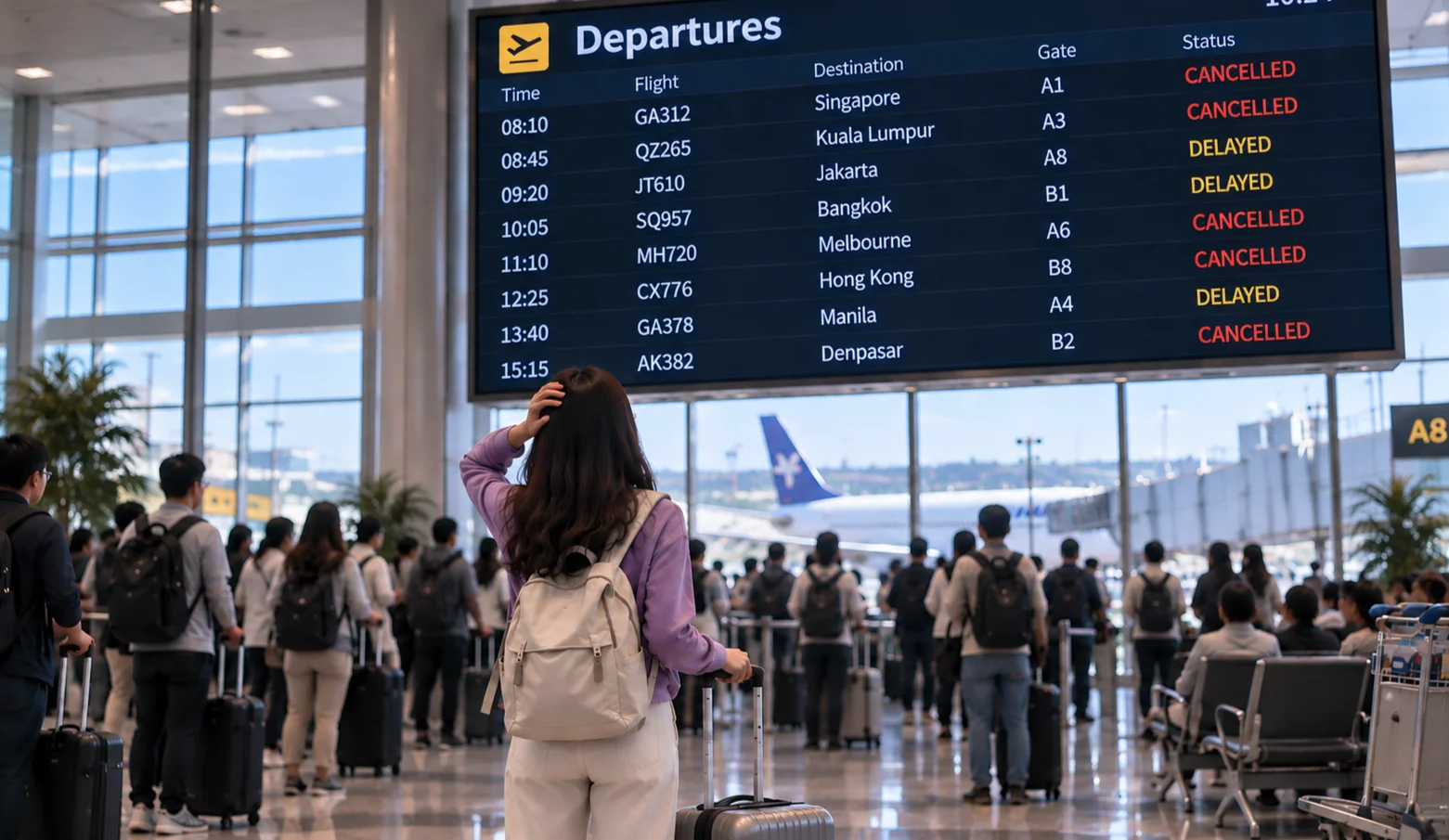
The situation temporarily had a direct impact on flight operations. Eight airports in Java and Sumatra were temporarily closed, including Soekarno-Hatta, Halim Perdanakusuma, Husein Sastranegara, and Radin Inten II airports. However, conditions began to improve on September 8, 2026. Several airports, including Soekarno-Hatta, Halim Perdanakusuma, Husein Sastranegara, Budiarto, and Pondok Cabe, reopened after conditions were assessed as suitable for flight operations delapan bandara di Jawa dan Sumatra mengalami penutupan sementara.
Although operations began to resume, monitoring continued because volcanic ash conditions can change depending on volcanic activity and wind direction. Anak Krakatau recorded further eruptive activity on September 8, so travelers should continue to pay attention to the latest developments Bahkan pada 8 September, Anak Krakatau kembali mencatat aktivitas erupsi, sehingga perkembangan terbaru tetap perlu diperhatikan.
For travelers, this is a reminder that even a carefully planned itinerary can change due to factors beyond their control. Flights may be delayed, canceled, or rerouted, while hotel reservations, transportation, and activities at the destination may also be affected.
So, what should you do if a volcanic eruption occurs while you are planning or taking a trip? Monitoring official information, understanding the options available when flights are disrupted, and planning a more flexible journey can help you deal with changes more effectively.
How Can a Volcanic Eruption Affect Travel?
The impact of a volcanic eruption on travel can vary depending on the eruption location, wind direction and speed, the altitude and concentration of volcanic ash, airspace conditions, and decisions made by aviation authorities and local governments. Even when an airport is not close to the eruption site, flights can still be affected if ash reaches flight paths or airport operational areas.
For travelers, the impact does not always end with the flight itself. Schedule changes can affect onward transportation, accommodation, activities at the destination, and may lead to additional travel expenses. Some impacts to be aware of include:
1. Delayed or Canceled Flights
Volcanic ash is a serious aviation safety concern because its particles can interfere with aircraft engines, reduce visibility, and affect various aircraft components and systems. Airlines and aviation authorities may therefore decide to delay or cancel flights when airspace or airport conditions are not considered safe.
These decisions may change as conditions develop. Travelers should therefore check their flight status regularly through official airline and airport channels, especially before heading to the airport.
2. Changes to Schedules, Routes, or Airports
When parts of the airspace cannot be used due to volcanic ash, airlines may make operational adjustments. Flights may be rescheduled, use a different route, return to the departure airport, or be diverted to another airport if necessary.
For travelers with connecting flights, these changes can also affect subsequent flight schedules. Be sure to follow airline updates regarding rescheduling options, alternative flights, or other available policies.
3. Longer Waiting Times at the Airport
Operational disruptions can lead to passenger queues, gate changes, rescheduling processes, and longer waiting times. When many flights are affected at the same time, restoring normal schedules may also take time even after airspace conditions begin to improve.
While waiting, monitor flight information boards and official airline notifications. Avoid leaving the airport until you know your flight status and the next instructions, unless the airline or airport advises otherwise.
4. Connecting Flights and Other Transportation May Also Be Affected
A delay to one flight can affect the next stage of the journey. Travelers may miss connecting flights, train or bus schedules, airport transfers, or transportation already booked at the destination.
If your journey involves multiple flights or modes of transportation, allow sufficient buffer time and keep all booking details so changes are easier to make when necessary.
5. Hotel and Activity Plans at the Destination May Change
Changes in departure and arrival times can affect hotel reservations, local transportation, tours, attraction tickets, or other prepaid activities. In some situations, travelers may need to extend their stay or arrange additional accommodation because of a delayed departure.
Keep booking confirmations, receipts, and proof of payment. If your schedule changes, contact the hotel or service provider promptly to find out what rescheduling or cancellation options are available.
6. Additional Travel Expenses
Travel disruptions can also result in expenses that were not originally budgeted for, such as meals while waiting, additional transportation, or accommodation if the journey has to be postponed until the next day.
Because each airline and service provider has different policies, travelers should check what assistance or compensation is available and keep proof of expenses related to the travel disruption.
7. Conditions at the Destination May Also Change
The effects of an eruption are not limited to flights. In affected areas, roads, ports, public transportation, tourist destinations, and public facilities may face restrictions or operational changes.
Volcanic ash can also affect air quality and visibility in certain areas. Before continuing a journey, travelers should monitor information from local governments, disaster management authorities, and destination operators, and comply with applicable restricted zones and safety instructions.
In short, the resumption of flight operations does not necessarily mean the entire journey has immediately returned to normal. Flight schedules, travel connections, and services at the destination may take time to stabilize. Travelers should therefore remain flexible and continue monitoring official information until their journey is complete.
What Should You Do If Your Flight Is Affected?
If your flight is affected by an eruption or volcanic ash, prioritize safety and avoid making decisions based solely on information circulating on social media. Flight status and airspace conditions can change quickly, so the latest information from official sources should be your primary reference.
1. Check Your Flight Status Regularly
Check your flight status through the airline’s app, official website, or customer service. Also check information from the airport operator before leaving, especially if volcanic ash has been reported around the flight path or destination airport.
2. Monitor Information from Official Authorities
Follow updates on volcanic activity from the Geological Agency/PVMBG, as well as weather and ash-dispersion information from BMKG. For changes to flight and airport operations, monitor updates from the Ministry of Transportation, airport operators, airlines, and local governments.
3. Contact the Airline If Your Flight Is Delayed or Canceled
If a delay or cancellation occurs, find out what options the airline provides. Depending on the airline’s policy and flight conditions, available options may include rescheduling, a refund, or an alternative flight.
If you have a connecting flight, inform the airline of your full itinerary so you can understand the options available for your onward flight.
4. Keep All Travel Documents and Supporting Evidence
Do not immediately discard your boarding pass or transaction records after a schedule change. Keep your tickets, boarding passes, booking confirmations, airline emails or notifications, receipts for additional expenses, and official documents relating to flight delays or cancellations.
These documents may be needed to change reservations, request refunds, or submit an insurance claim if the incident is covered under the policy benefits.
If you use Oona Insurance, you may be able to submit a claim online through the Oona website in a few simple steps mengajukan klaim secara online melalui website Oona.
5. Check Other Reservations That May Be Affected
Flight changes can affect hotel bookings, airport transportation, car rentals, tours, and attraction tickets. Contact the relevant service providers promptly to find out whether your bookings can be rescheduled or canceled.
6. Continue to Follow Safety Instructions
Do not force travel into areas that are under restrictions or subject to safety advisories. If you are in an area affected by volcanic ash, follow health and safety guidance from local authorities.
Make Protection Part of Your Travel Preparation