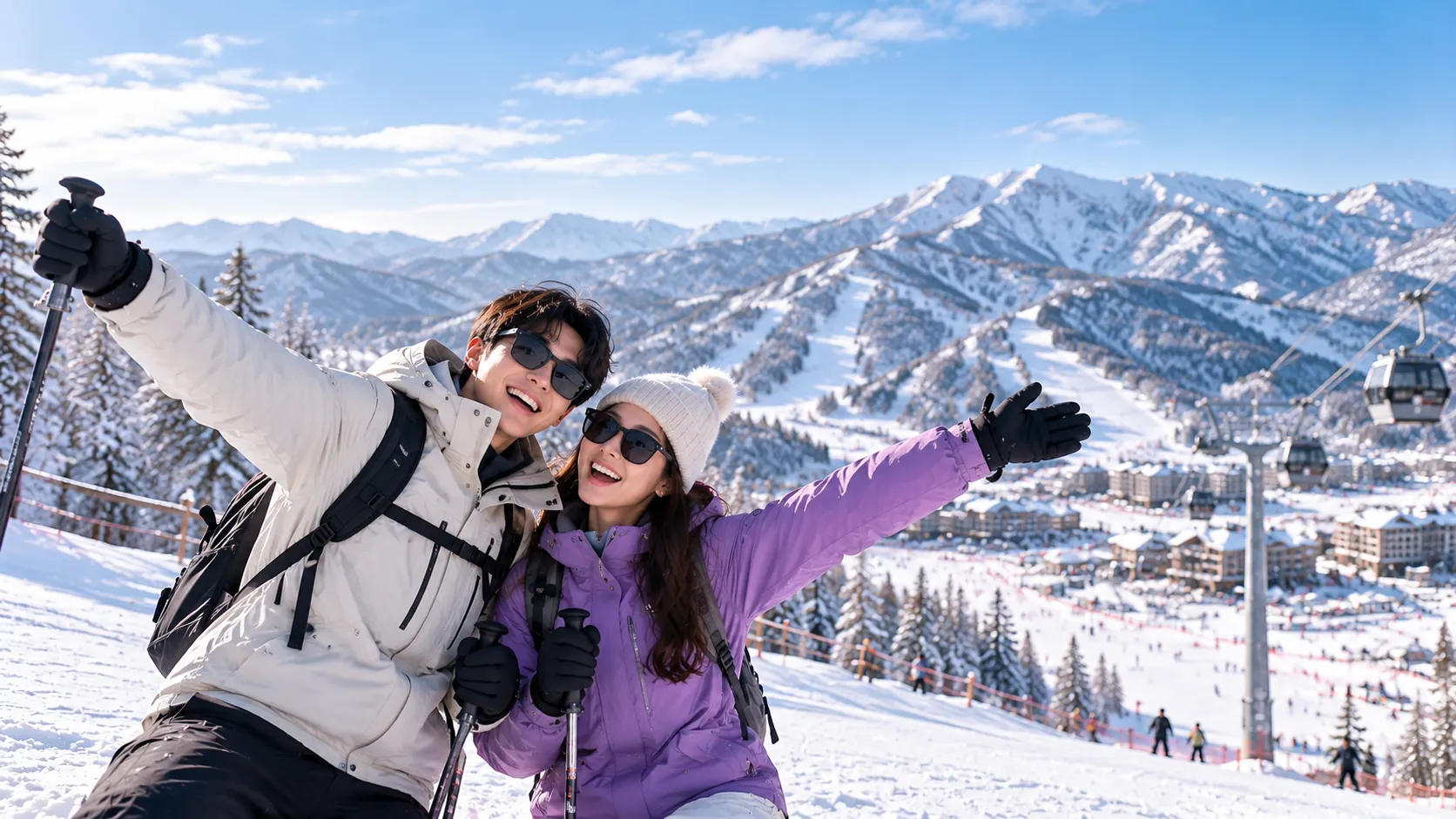
Why Is Winter an Exciting Time to Visit South Korea?
Winter transforms South Korea, from the illuminated streets of Seoul to the snow-covered mountains of Gangwon. For travelers interested in snow sports, December through February is generally the main operating season for ski resorts. However, slope openings depend on temperatures, snow conditions, and the use of artificial snowmaking systems.
If you're visiting Korea in winter for the first time, prepare layered clothing, a windproof jacket, gloves, and non-slip footwear. Mountain temperatures can be significantly lower than those in central Seoul.
Popular Winter Destinations and Ski Resorts in South Korea
South Korea has several ski resorts offering different facilities and levels of difficulty. Here are some options worth considering.
1. Mona Yongpyong Ski Resort – Pyeongchang
Mona Yongpyong is known as one of South Korea's oldest ski resorts, offering slopes suitable for beginners and experienced skiers. It is an excellent option for travelers who want to enjoy skiing while taking in the mountain scenery of Gangwon. Before visiting, check slope conditions, lift operating hours, and transportation availability.
2. Phoenix Snow Park – Pyeongchang
Phoenix Snow Park is known for its skiing and snowboarding facilities, including areas designed for freestyle activities. The resort also offers snow recreation facilities for visitors who prefer not to ski. This makes it a suitable choice for groups with different interests, including travelers who want to enjoy the snow without participating in winter sports all day.
3. Alpensia Ski Resort – Pyeongchang
Alpensia offers ski slopes, accommodation facilities, and various winter activities within one resort complex. It can be a good choice for families or couples looking to enjoy a mountain getaway with a more relaxed itinerary.
4. Elysian Gangchon – A Ski Resort Near Seoul
Elysian Gangchon is suitable for travelers who want to try skiing without staying far from Seoul. The resort can be reached by train to Baegyangni Station, followed by connecting transportation according to the operating schedule.
Many of its slopes are designed for beginner and intermediate levels, making it appealing to first-time skiers.
5. Sono Belle Vivaldi Park and Other Ski Resorts
Vivaldi Park is another option in Gangwon, offering skiing activities, including night skiing sessions during certain operating periods. When choosing a resort, consider its distance from your hotel, slope difficulty levels, equipment rental facilities, and ski instructor availability.
Oona Tip: Don't compare ticket prices alone. Check whether the package includes a lift pass, ski or snowboard equipment rental, winter clothing, a helmet, and transportation.
Winter Travel Risks You Should Know
Snow-covered landscapes may be beautiful, but cold temperatures and winter sports come with certain risks.
1. Slipping on Snowy or Icy Surfaces
Snow that melts and refreezes can create difficult-to-see layers of ice. These conditions increase the risk of slipping on sidewalks, stairs, or areas surrounding ski resorts.
Wear footwear with good traction and walk more slowly, especially on surfaces that appear shiny or wet.
2. Skiing and Snowboarding Injuries
Beginners may lose their balance, fall, or collide with other slope users.
Wear a helmet and appropriate safety equipment. If you have little experience, taking lessons with an instructor can help you understand basic techniques before heading onto the slopes.
3. Night Skiing Risks
Some resorts offer night skiing activities. Although exciting, artificial lighting and reduced visibility can affect your ability to see slope conditions. Reduce your speed and avoid slopes beyond your skill level.
4. Exposure to Extremely Cold Temperatures
Spending too much time in low temperatures can increase the risk of hypothermia or frostbite, especially when clothing becomes wet or the body is exposed to strong winds.
Seek warmth immediately if you experience excessive shivering, numbness, or difficulty moving your fingers.
5. Weather-Related Transportation Disruptions
Heavy snowfall and road conditions can affect travel to ski resorts. Allow extra travel time, especially if you are using shuttle services or have a return flight scheduled for the following day.
6. Baggage and Sports Equipment Issues
Airlines may apply special baggage policies to ski and snowboard equipment. Check size limits, weight restrictions, and additional fees before departure.
If renting equipment at the resort, document its condition and keep your transaction receipts.
Safety Tips for Skiing and Snowboarding in South Korea
For travelers trying skiing or snowboarding for the first time, safety should be a priority.
Choose slopes that match your skill level. Start in beginner areas before attempting more challenging slopes.
Wear protective equipment. Helmets, ski goggles, waterproof gloves, and layered clothing help improve comfort and safety.
Consider taking lessons. Learn how to stop, turn, maintain balance, and fall more safely.
Inspect rented equipment. Make sure boots, skis, and snowboards fit properly.
Take regular breaks. Fatigue can reduce concentration and increase the risk of injury.
Use sunscreen and lip balm, as sunlight reflected from snow and cold air can affect your skin.
What Should You Pack for a Winter Holiday?
A layered clothing system helps keep your body warm without restricting movement.
Item
|
Purpose
|
|---|
Thermal innerwear
|
Helps retain body warmth
|
Fleece or sweater
|
Provides an insulating layer
|
Windproof and waterproof jacket
|
Protects against wind and snow
|
Gloves and headwear
|
Protects hands, ears, and head
|
Non-slip footwear
|
Helps reduce the risk of slipping
|
Ski goggles and helmet
|
Provides protection during snow sports
|
Lip balm and sunscreen
|
Protects skin from dry air and UV rays
|
Also bring personal medications, a power bank, travel documents, and digital copies of hotel and transportation reservations.
Estimated Cost of a Winter Holiday in South Korea
Travel costs depend on the departure season, resort location, trip duration, and chosen activities. For planning purposes, here is an estimated budget for a six-day, five-night trip from Jakarta for one person.
Expense Category
|
Estimated Budget
|
|---|
Round-trip flights
|
IDR 5,000,000–9,000,000
|
Accommodation for 5 nights (shared room)
|
IDR 2,000,000–4,000,000
|
Food and beverages
|
IDR 1,500,000–2,500,000
|
Local and intercity transportation
|
IDR 700,000–1,500,000
|
Ski pass and equipment rental
|
IDR 800,000–2,000,000
|
Total Estimated Cost
|
IDR 10,000,000–19,000,000
|
Disclaimer: The figures above are budget estimates, not actual prices or official offers. Accommodation costs assume a shared room. The total excludes visa or entry document fees, if applicable, instructor lessons, travel insurance, shopping, and personal expenses. Check the latest prices before booking.
To save money, consider choosing a ski resort that can be visited on a day trip from Seoul, comparing ski packages that include transportation, and booking accommodation early during peak travel periods.
When Is the Best Time to Enjoy Snow and Skiing?
December through February is the winter season in South Korea. However, experiences may vary depending on when you visit.
December: The beginning of the ski season at many resorts, although not all slopes open immediately.
January: Generally one of the coldest months, offering a better chance of experiencing more consistent winter snow conditions in mountainous areas.
February: Skiing remains available at several resorts, but snow conditions and operating schedules should be checked.
Snow does not always fall or remain on the ground throughout winter in Seoul. To increase your chances of enjoying snowy landscapes, consider visiting the mountainous areas of Gangwon.
Transportation to Ski Resorts
Travelers can use shuttle buses, trains, or combinations of public transportation to reach various ski resorts. Some resorts provide shuttle services from Seoul, but schedules, pickup locations, and reservation requirements vary.
For the Pyeongchang area, travelers can combine KTX train services to nearby stations with onward transportation. If traveling with family or carrying multiple suitcases, consider the convenience of transfers rather than focusing only on ticket prices.
Preparing for Your Trip to South Korea
Before departure, make sure your passport, travel documents, hotel reservations, and South Korea's entry requirements are in order. Indonesian passport holders should check the latest visa or entry permit requirements through official South Korean government channels.
Also check weather forecasts for the cities and ski resort areas you plan to visit. Temperatures in Seoul can differ significantly from those in mountainous regions. If you plan to ski, book equipment rentals or instructor lessons in advance, especially on weekends and during holiday periods.
Why Is Travel Insurance Important for Winter Holidays?
A winter holiday is often a long-awaited experience. From purchasing flight tickets and booking hotels to preparing specialized winter clothing, the trip requires considerable time and money.
However, unexpected events can still occur. Flights may be delayed, baggage problems may arise, or you may need medical treatment following an accident during your trip.
Setting aside a small portion of your budget for travel insurance can be a simple way to help reduce the financial impact of certain risks that could otherwise lead to higher expenses.
Oona Travel Insurance for trips to South Korea can be considered to help protect your journey according to the benefits, terms, and conditions of the policy, including coverage related to emergency medical needs, travel disruptions, and certain baggage issues.
For travelers planning to ski or snowboard, it is important to check the availability of additional winter sports coverage and the conditions governing covered activities.
Risks That Travel Insurance Can Help Cover
Travel insurance may provide financial protection for certain events according to the policy, such as:
Emergency medical needs: Helps cover eligible medical treatment expenses according to the policy terms.
Travel disruptions: Provides benefits for certain delays or disruptions as specified in the policy.
Baggage issues: Helps address certain baggage-related risks included in the coverage.
Winter sports activities: May require additional coverage depending on the type of activity and policy conditions.
Not all accidents or skiing activities are automatically covered. Review coverage limits, exclusions, and claim requirements before purchasing.
How to Choose Travel Insurance for Skiing and Snowboarding
When choosing travel insurance, don't compare premium prices alone. Make sure the benefits match your planned activities. Check whether the policy covers your destination country, the entire travel period, emergency medical benefits, and relevant travel disruption and baggage protection.
If you plan to ski or snowboard, make sure the winter sports coverage you purchase specifically applies to those activities. Coverage for skiing on designated slopes (on-piste) does not mean that skiing outside designated slopes (off-piste) is automatically covered. Read the policy terms carefully, including benefit limits, deductibles if applicable, exclusions, and claim procedures.
Safety should remain a priority even if you have travel insurance. Follow weather updates and resort management instructions. Avoid participating in activities when slopes are closed or snow conditions are unsafe. Use appropriate safety equipment, maintain a safe distance from other slope users, and adjust your speed according to your ability.