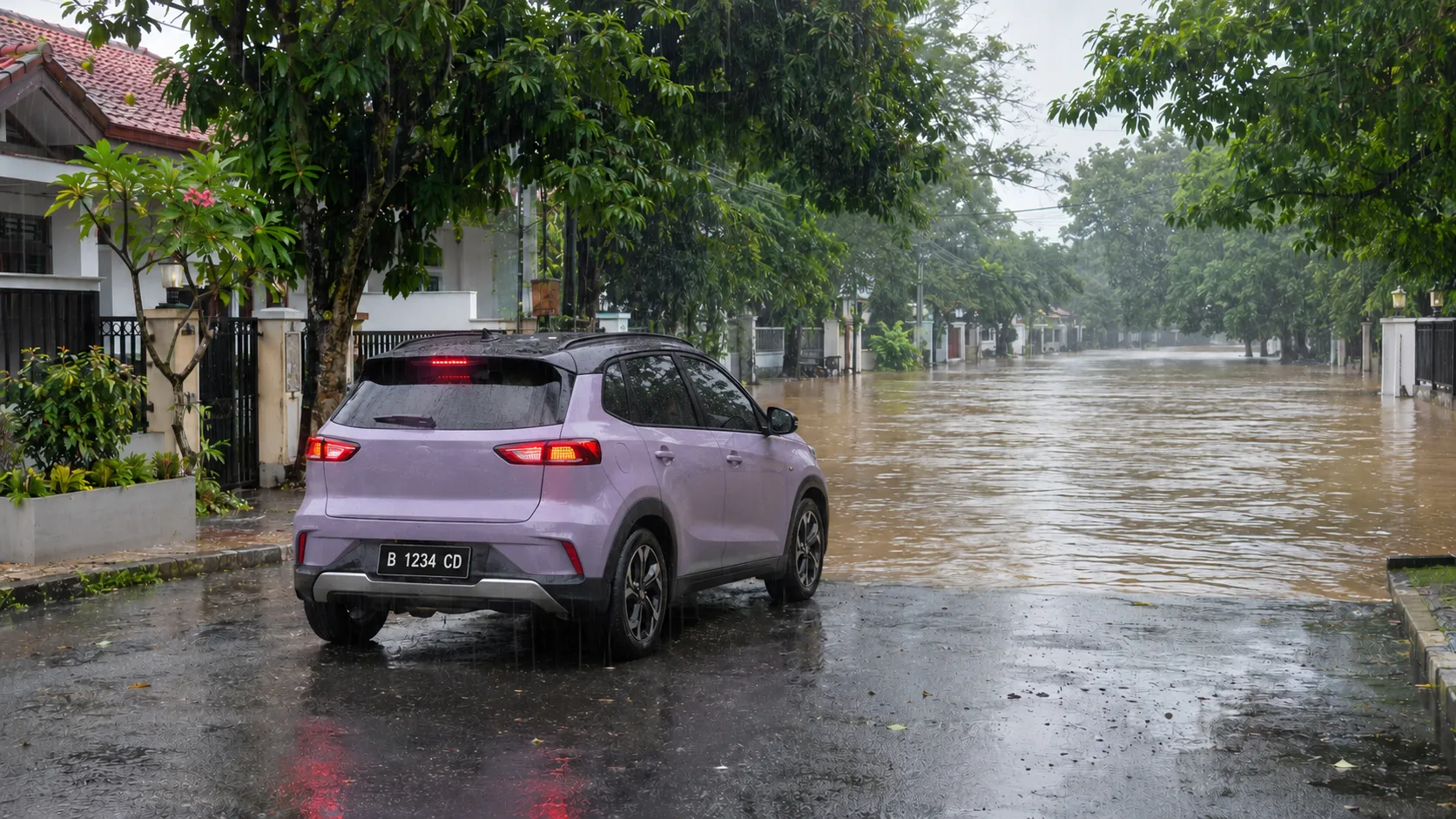
Flooded Roads During the Rainy Season and the Risks for Drivers
As the rainy season begins, drivers should watch for roads that may flood suddenly. Water can accumulate after heavy rain, especially in low-lying areas or places with inadequate drainage.
According to Indonesia’s Meteorology, Climatology, and Geophysics Agency (BMKG) 2026/2027 rainy season forecast, parts of Indonesia are expected to enter the rainy season between November and December 2026. The rainy season is expected to peak at different times across regions between December 2026 and February 2027.
Drivers should be especially cautious when they encounter a flooded road. Even if the water looks shallow, it can be hard to judge the strength of the current or see potholes and damaged pavement underneath.
So, should you drive through a flooded road? The safest choice is to avoid crossing when you can’t judge the water depth, the strength of the current, or the condition of the road underneath. Here are the risks to consider and the steps you can take.
The Dangers of Driving Through Floodwater
Driving through floodwater can cause your car to stall and put you and your passengers at risk. Here are five common hazards.
1. Water Can Enter the Engine and Cause Hydrolock
Hydrolock, also known as water hammer, can occur when water enters the engine’s combustion chambers through the air intake. Water cannot be compressed like an air-fuel mixture, so it can cause severe damage to internal engine components.
The risk increases when the water is high enough to reach the engine’s air intake.
2. The Vehicle’s Electrical System Can Be Damaged
Water that reaches electrical components can cause short circuits, interfere with sensors, or damage electronic control modules. This can trigger warning lights, disrupt vehicle functions, or leave the car inoperable.
3. You Can Lose Control of the Car
Standing water can reduce tire grip, while a strong current can push the vehicle sideways. The risk increases on slippery roads or where water is flowing out of drains.
4. Floodwater Can Hide Potholes and Road Damage
Floodwater can conceal potholes, open drains, and damaged pavement. If you drive through it, you could damage your tires or suspension or lose control of the car.
5. Your Car Can Stall in the Floodwater
Engine failure, electrical problems, or loss of traction can leave your car stranded in floodwater. If the water continues to rise, passengers may be in danger and evacuation can become more difficult.
Signs a Flooded Road Is Unsafe to Cross
Flood conditions vary. If you spot any of the signs below, avoid continuing along that route.
Road condition
| Risk to watch for
|
|---|
You can’t judge the water depth
| Your car could drop into a pothole or a deeper stretch of water.
|
Water is flowing quickly
| The current can push your car sideways and cause you to lose control.
|
You can’t see the road surface
| Potholes, open drains, and damaged pavement are difficult to spot.
|
Water levels are rising
| Your car could become stranded as conditions worsen.
|
A vehicle has stalled
| A stalled vehicle can indicate hazardous conditions along the route.
|
Authorities have closed the road
| The area has been deemed unsafe or crews are responding to the flooding.
|
Disclaimer: Consider tire height and ground clearance alongside other conditions. Water depth can change, and even a current that looks calm can be dangerous.
If you spot any of these warning signs, take time to decide how to proceed. The steps below can help you and your passengers stay safe.
What to Do When You Encounter a Flooded Road
Give yourself time to assess the situation before proceeding. These steps can help protect you and your passengers and reduce the risk of damage to your car.
1. Slow Down and Keep a Safe Distance
When you see floodwater ahead, slow down gradually and leave space between your car and other vehicles. Avoid sudden braking, especially if the road is slippery from rain.
2. Avoid Following the Vehicle Ahead Into the Water
Even if another car makes it through, crossing may still be unsafe for your vehicle. Ground clearance, air intake position, vehicle weight, and road conditions all affect the risk.
3. Look for a Safer Route
Use a navigation app to find an alternative route and check road closure updates from local authorities. If you can’t find a safe route, consider postponing your trip.
4. Turn Back if You Can’t Judge the Water Depth
Water that looks shallow can still hide hazards. If you can’t judge the depth or see what condition the road is in, turn back where it’s safe to do so.
5. Follow Directions From Authorities on the Scene
Follow any instructions from police, road operators, or flood response teams. Respect road barriers and closures.
What to Do if Your Car Gets Stuck in Floodwater
Even if you take precautions, water levels can rise unexpectedly. If your car gets stuck, assess the situation and take the following steps as conditions allow.
Put passenger safety first. Check whether the water is still rising and whether there’s a dangerous current.
Avoid restarting the engine if it has stalled after being submerged. Water may already have entered the engine, and restarting it could make the damage worse.
Stay out of fast-moving floodwater. If you need to evacuate, follow instructions from emergency responders. Avoid walking or swimming through water when you can’t assess the current.
Call emergency services or roadside assistance. Share your location and describe the flooding so responders can determine how to help safely.
Have the car inspected before driving it again. Ask a technician to check the engine, brakes, and electrical system after the car has been submerged.
Knowing what to do if your car gets stuck in floodwater can help you respond quickly and keep your passengers safe.
How to Prepare for Driving During the Rainy Season
Prepare before setting off, especially when heavy rain is forecast.
Check the weather forecast. Follow rain forecasts and early warnings through BMKG’s official channels.
Check your tires and brakes. Make sure tire pressure, tread depth, and braking performance are all within safe limits.
Make sure your wipers and lights work. Good visibility is especially important when driving in the rain.
Identify flood-prone areas. Check your route and avoid roads where flooding has been reported.
Pack emergency supplies. Carry a flashlight, a power bank, a first-aid kit, and roadside assistance contact numbers.
Review your car insurance. Check whether your policy includes the flood coverage extension you need.
These preparations can help you make quicker decisions if heavy rain changes road conditions.
Protect Your Car Against Flood Damage With Oona Car Insurance
Flooded roads can cause anything from engine trouble to electrical damage. Even careful drivers can have their journeys disrupted by severe weather and sudden flooding.
Alongside preparing for rainy conditions, consider car insurance as part of how you protect your vehicle. Oona Car Insurance offers options to suit different needs.
All Risk Car Insurance covers a range of risks specified in the policy, including partial damage and total loss.
Total Loss Only (TLO) Car Insurance covers vehicle loss or total damage subject to policy terms, including the applicable loss threshold.
Flood damage typically requires a separate coverage extension. Coverage remains subject to the terms and exclusions of your policy.
Before buying Oona Car Insurance, review what the policy covers, the available flood coverage extensions, the coverage limits, and how to file a claim. Preparing for wet-weather driving and choosing suitable coverage can help you manage the risks of the rainy season.