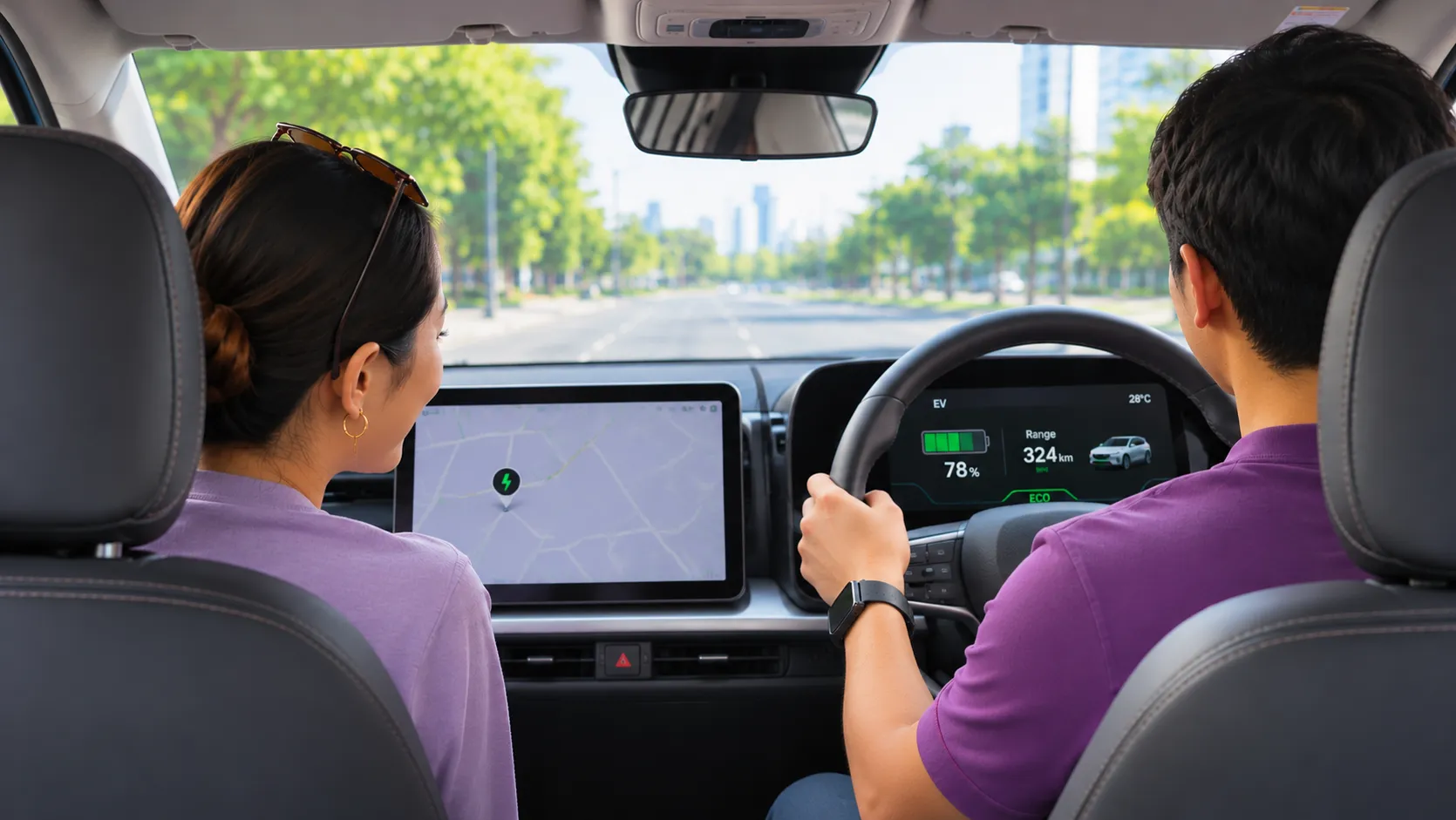
Understanding the Factors That Cause Electric Car Batteries to Drain Quickly
Electric cars use energy stored in their batteries to power the motor and operate various vehicle systems. Energy consumption depends on driving habits, road conditions, ambient temperature, and features such as air conditioning.
According to electric vehicle energy efficiency data from the U.S. Department of Energy, regenerative braking can return some energy to the battery. In an illustration combining city and highway driving, recovered energy is estimated to account for approximately 22% of the energy required for the journey. This is an illustrative figure, not a guaranteed saving for every electric car.
This means driving style and the use of vehicle features can affect battery efficiency. However, it is important to distinguish between reducing battery consumption to extend driving range and maintaining battery health to slow long-term capacity loss.
Why Electric Car Batteries Drain Quickly
Before applying energy-saving tips, it helps to understand which factors increase battery consumption.
Factor
| Effect on the Battery
|
|---|
Aggressive Acceleration
| Requires substantial power over a short period
|
High Speeds
| Increase aerodynamic drag and energy demand
|
Air Conditioning Use
| Adds electricity consumption for cabin cooling
|
Uphill Roads
| Require more energy to propel the vehicle
|
Low Tire Pressure
| Increases rolling resistance
|
Excessive Weight
| Increases the energy needed while driving
|
Extreme Temperatures
| Affect battery efficiency and temperature management needs
|
Disclaimer: Not all factors can be avoided. However, drivers can adjust their driving habits to reduce unnecessary energy consumption.
Not all factors can be avoided. However, drivers can adjust their driving habits to reduce unnecessary energy consumption. Understanding these factors makes it easier to adopt simple steps to optimize battery use.
How to Save Electric Car Battery Power and Prevent It from Draining Quickly
The following steps can help improve electric car battery efficiency during both everyday commutes and longer journeys.
1. Use Eco Mode While Driving
Eco mode is available in many electric cars to help optimize energy consumption. On some models, it adjusts accelerator response and the energy used by supporting vehicle systems.
Eco mode is suitable for normal traffic conditions, particularly when rapid acceleration is unnecessary.
However, actual savings depend on the vehicle model and driving habits. Eco mode does not guarantee the same driving range in every situation.
2. Avoid Sudden Acceleration and Braking
Pressing the accelerator aggressively requires the electric motor to draw more power over a short period. Repeating this habit can increase energy consumption.
To save battery power, accelerate gradually, maintain a safe following distance, and anticipate changes in traffic.
Smooth braking can also help make better use of regenerative braking, depending on the vehicle’s capabilities and settings.
3. Make Use of Regenerative Braking
Regenerative braking allows the electric motor to act as a generator as the vehicle slows down. Some of the kinetic energy that would otherwise be lost during braking can be returned to the battery.
Drivers can take advantage of this feature by slowing down gradually and selecting an appropriate regenerative braking level for the road conditions.
However, energy recovery varies by model and may be limited when the battery is nearly full or at certain temperatures. The system also does not replace the regular brakes when they are needed.
4. Use Air Conditioning Efficiently
Air conditioning draws energy from the battery to maintain a comfortable cabin temperature. In hot weather, greater cooling demand can reduce the vehicle’s driving range.
Choose a comfortable temperature setting and avoid excessive cooling. If the vehicle supports pre-conditioning, drivers can cool the cabin while the car is still connected to a charger.
Even when trying to save battery power, do not compromise comfort or concentration, especially in very hot weather.
5. Maintain a Steady Driving Speed
Driving at high speeds uses more energy because aerodynamic drag increases as vehicle speed rises.
Drivers can save battery power by maintaining a steady speed, avoiding unnecessary acceleration, and following speed limits and road conditions.
Where available, cruise control can help maintain speed on suitable roads. However, it may not always be more efficient on hilly routes or in frequently changing traffic.
6. Keep Tire Pressure at the Recommended Level
Underinflated tires increase rolling resistance, which means the vehicle needs more energy to move.
Check tire pressure regularly when the tires are cold and follow the manufacturer’s recommendation shown on the vehicle or in the owner’s manual.
Do not overinflate tires beyond the recommended pressure just to save energy, as doing so can affect comfort, tire wear, and driving safety.
7. Remove Unnecessary Vehicle Weight
The heavier the vehicle, the more energy it needs to accelerate and climb hills.
Remove unnecessary items from the trunk, especially if the car is frequently used for daily commuting.
Also remove roof racks or other accessories that increase aerodynamic drag when they are not needed. This simple step can improve driving efficiency.
8. Plan Your Route Carefully
Congestion, steep hills, and high-speed driving can affect an electric car’s battery consumption.
Before setting off, check the estimated driving range and choose an appropriate route. For longer trips, consider the locations of public electric vehicle charging stations (SPKLU) and charger availability along the way.
Do not rely solely on the range estimate shown on the dashboard, as actual range may change with driving conditions.
The Difference Between Saving Battery Power and Maintaining Electric Car Battery Health
Saving battery power and maintaining electric car battery health are closely related, but they serve different purposes. Saving battery power focuses on using energy more efficiently so the vehicle can travel farther on a single charge.
Meanwhile, maintaining battery health aims to preserve capacity and performance over the long term. Understanding the difference helps electric car owners adopt appropriate driving and maintenance habits.
Aspect
| Saving Battery Power
| Maintaining Battery Health
|
|---|
Goal
| Reduce energy consumption
| Slow the loss of battery capacity
|
Focus
| Driving range per charge
| Long-term battery lifespan
|
Examples
| Eco mode, steady speed, AC settings
| Recommended charging practices and temperature management
|
Result
| More efficient energy use
| Better preservation of battery capacity over time
|
An electric car with reduced driving range does not necessarily have a damaged battery. Energy consumption may rise due to weather, air conditioning, speed, and road conditions.
However, if the reduction in range is unusual or accompanied by system warnings, a technical inspection is recommended.
To understand why an electric car may lose power or become undrivable, explore the causes and solutions for an electric car that suddenly breaks down on the road.
Protect Your Electric Car with Oona Car Insurance
Maintaining battery efficiency is an important part of electric car care. By adopting good driving habits, charging according to recommendations, and following a regular service schedule, EV owners can help maintain vehicle performance and optimize driving range.
However, routine maintenance alone cannot protect a vehicle from every risk on the road. Accidents, collisions, unexpected damage, and theft can lead to significant repair costs or financial losses. Electric cars also have specialized components, such as high-voltage batteries and electronic drive systems, that require handling by qualified technicians.
For additional financial protection, EV owners can consider Oona Electric Car Insurance, with coverage options that can be tailored to the vehicle’s needs and risks.
Oona Electric Car Insurance offers two main types of coverage:
All Risk (Comprehensive) Car Insurance: Covers partial or total damage and vehicle theft arising from risks covered under the policy. This option may suit electric car owners looking for broader protection.
Total Loss Only (TLO) Car Insurance: Covers vehicle theft or damage where the loss exceeds 75% of the vehicle’s value immediately before the incident, subject to policy terms. This option may suit EV owners seeking protection primarily against major losses.
In addition to vehicle coverage, Oona lists 24-hour roadside assistance and optional coverage extensions on its electric car insurance product page. These benefits may help owners deal with certain situations while traveling, subject to the availability, scope, and requirements of the selected product and policy.
Please note that not all electric car battery problems are covered by insurance. Capacity loss from normal use, natural degradation, or wear and tear is not automatically covered. Battery damage caused by an accident or another event may be considered if the cause is an insured risk and meets the policy terms.
By combining proper battery care with suitable electric car insurance, EV owners can drive with greater peace of mind and be better prepared for financial risks arising from unexpected events.